

.jpg)

.jpg)


ShowerClear and the Hidden Hygiene Problem Most People Never Think About Inside Their Shower Head
- Apr 2
- 2 min read
Updated: May 4
Biohack Yourself APR 2026
You optimize your diet. You track your sleep. You think about air quality, water filtration, and recovery.
But there’s one daily exposure almost everyone overlooks: what’s happening inside the shower head.

The Assumption That Doesn’t Get Questioned
Most people assume their shower is clean.
Water flows. Everything rinses. It feels fresh.
But here’s the problem:
Running water doesn’t automatically mean clean—especially inside a sealed structure.
A shower isn’t just a surface. It’s a system.
And the one place water sits between uses is also the one place most people never see.
The Design No One Reconsiders
Most conventional shower heads are permanently sealed.
That means:
Moisture can remain trapped after use
Airflow is minimal
Internal surfaces are inaccessible
The result?
The area most exposed to warm water over time is also the area you can’t inspect, reach, or clean directly.
It’s not something people think about—because they’ve never been given a reason to.
What Research Has Already Shown
Studies published in journals such as mBio and Frontiers in Microbiomes have examined shower heads as environments where complex biofilm communities can develop over time.
Not on the outside.
Inside.
And in most homes, that environment remains completely hidden.

The Real Blind Spot
The issue isn’t neglect.
It’s assumption.
People clean what they can see. They maintain what they can access.
But when a system is closed, the default behavior is to assume it takes care of itself.
That assumption hasn’t really been challenged—until now.
A Different Way to Think About It
ShowerClear starts with a simple premise:
If you can’t open it, you can’t control it.
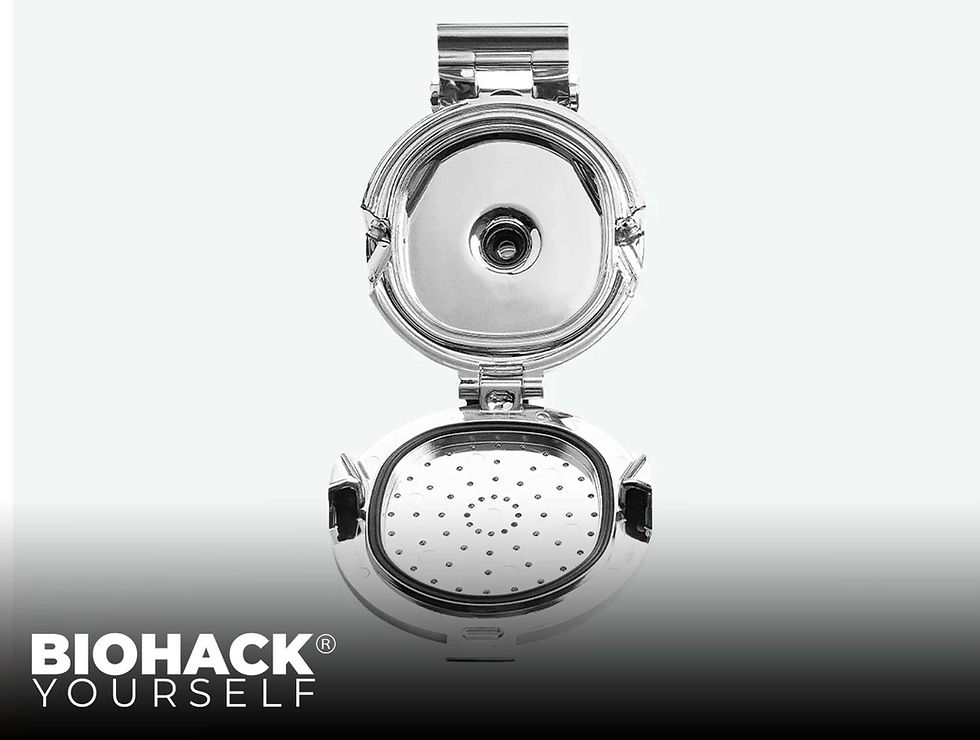
Its patented design allows the shower head to be opened, turning a sealed, hidden space into one that is visible and reachable.
That shift changes everything:
Internal surfaces can be inspected
Moisture isn’t trapped in a closed chamber
Airflow becomes part of the system
After use, the unit can be left open to dry, removing the conditions that typically persist inside enclosed designs.
Filtration vs. Reality
Many products focus on filtering what comes through the water.
But filtration doesn’t change what happens inside a closed fixture over time.
ShowerClear takes a different position:
Instead of adding layers, it removes the one limitation that’s always been there—the lack of access.

Why This Matters More Than People Think
In biohacking, progress often comes from identifying variables others ignore.
The shower is one of the most consistent daily exposures in modern life.
Yet for decades, its internal environment has remained largely unquestioned—not because it’s irrelevant, but because it’s invisible.
A Small Shift That Changes the System
ShowerClear doesn’t change how you shower.
It changes what you can see, reach, and manage inside the system itself.
Because when something is used every day, the biggest variable may be the one no one ever thought to look at.
ShowerClear is a featured brand in the Biohack Yourself Magazine Spring 2026 issue with Andrew Tate on the cover, available in stores and online on April 21, 2026.
Disclaimer:
Biohack Yourself Peer Review is an editorial, educational, and entertainment process for sponsored content. It is not a scientific peer review or regulatory evaluation. Please review our full Terms & Conditions and Legal Disclaimers


