

.jpg)

.jpg)


The Problem Was Never Sitting. It Was Staying Still.
- Jul 15
- 4 min read
Biohack Yourself JUL 2026

For nearly two decades, workplace wellness has been built around a simple idea: sitting is the problem.
The evidence seemed clear. Modern workers spend most of their day behind screens, moving little and remaining in the same position for hours at a time. In response, offices introduced ergonomic chairs, standing desks, treadmill desks, posture supports, and countless accessories designed to make desk work healthier.
Yet despite all these upgrades, one question remains:
Why do so many people still finish the workday feeling stiff, tired, and uncomfortable?
The answer may be that sitting was never the real issue. The bigger problem is that most of us spend our days being still.
Whether you're seated in an expensive ergonomic chair or standing behind a premium adjustable desk, the body eventually responds the same way to prolonged inactivity. Muscles become less engaged. Movement decreases. Stiffness accumulates. By the end of the day, many people feel physically depleted despite having barely moved at all.
This is where a growing number of ergonomics experts and workplace wellness advocates are beginning to shift the conversation. Instead of asking whether sitting or standing is better, they're asking a different question:
How can we bring more movement back into the workday?

Why Standing Desks Aren't the Complete Answer
Standing desks unquestionably improved workplace ergonomics. They encouraged people to spend less time seated and gave workers more flexibility throughout the day.
But standing itself is not movement.
Anyone who has spent several hours at a standing desk knows the feeling. The lower back begins to tighten. Weight shifts from one foot to the other. Shoulders become tense. The body starts searching for relief from what is ultimately another static position.
Human movement was never designed to operate like a light switch that flips between sitting and standing. The body functions best through constant adjustments—small shifts in posture, subtle muscle engagement, balance corrections, and changes in position that occur naturally throughout the day.
When those movements disappear, discomfort often follows.
A Different Approach to Workplace Wellness
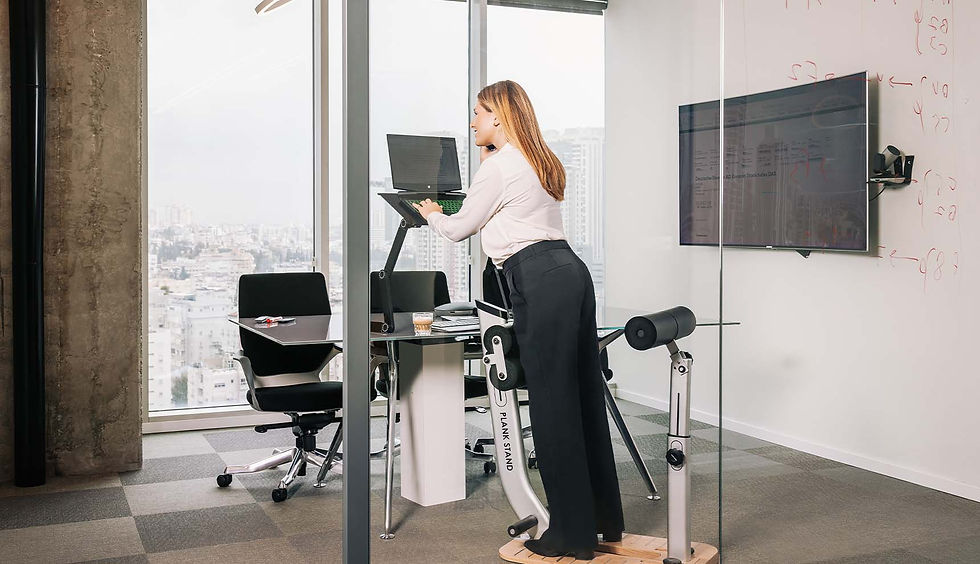
PlankStand was developed around the idea that workstations should encourage movement rather than simply provide another position to remain in.
At first glance, the system looks deceptively simple. Positioned beneath a standing desk, it allows users to lean into adjustable support cushions while continuing to work normally. But the experience is very different from passive standing.
As users lean into the device, the core and stabilizing muscles naturally become more engaged. Small postural adjustments occur continuously. Weight shifts. Balance changes. The body remains active without requiring a dedicated workout or interruption to productivity.
The goal isn't exercise.
The goal is restoring some of the movement modern work has gradually removed.
The Hidden Cost of Passive Work
One reason many workers struggle with recurring back discomfort, stiffness, and fatigue is that modern office environments encourage passivity.
Most ergonomic products focus on supporting the body from the outside. Chairs provide lumbar support. Cushions reduce pressure points. Accessories help improve alignment.
These solutions can certainly improve comfort, but they often address the symptoms rather than the underlying cause.
The body relies on a network of muscles to support posture and movement. When those muscles become underutilized for hours at a time, the burden shifts elsewhere. Over time, this can contribute to the discomfort many desk workers experience every day.
PlankStand approaches the problem differently by encouraging the body to participate in its own support system. Rather than simply holding the user in place, it creates opportunities for gentle engagement throughout the workday.
Designed for the Reality of Modern Work
Most people aren't looking to turn their office into a gym.
They simply want to feel better at the end of the day than they did yesterday.
That's what makes the concept behind PlankStand particularly practical. It doesn't require additional workout sessions, complicated routines, or major changes to a person's schedule. It integrates directly into work that is already happening.
A virtual meeting becomes an opportunity for movement. An hour of answering emails becomes an opportunity to engage the core. A long afternoon of focused work becomes less physically passive.
The cumulative effect may seem small in any single moment, but those moments add up over weeks, months, and years.

The Future of Workplace Wellness May Be Simpler Than We Think
The next generation of workplace wellness may not be about finding the perfect chair, the perfect desk height, or the perfect posture.
It may be about rediscovering something far more fundamental.
The human body was designed to move.
Not intensely all day. Not constantly exercising. Simply moving more than modern work environments currently allow.
For years, we treated sitting as the enemy and standing as the solution. Increasingly, it appears the real solution lies somewhere in between.
Movement.
And sometimes, the most meaningful innovations are the ones that help us bring it back.
PlankStand is a featured brand in the Biohack Yourself Magazine Summer 2026 issue with Bryan Johnson on the cover, available in stores and online on July 27, 2026.
Disclaimer:
Biohack Yourself Peer Review is an editorial, educational, and entertainment process for sponsored content. It is not a scientific peer review or regulatory evaluation. Please review our full Terms & Conditions and Legal Disclaimers


