

.jpg)

.jpg)


The Most Overlooked Organ in Dentistry Isn't in the Mouth
- Jul 15
- 4 min read
Biohack Yourself JUL 2026

When most people think about dentistry, they think about teeth.
Cavities. Crowns. Implants. Orthodontics. Gum health.
But there is another system quietly influencing nearly every dental appointment—one that can affect patient comfort, provider performance, perceived pain, recovery, and even healing outcomes.
It is not found in the mouth.
It is the nervous system.
Increasingly, healthcare professionals are recognizing that anxiety and stress are not simply emotional experiences. They are physiological states that influence how the body responds to treatment. And nowhere is that more apparent than in the dental chair.
For both patients and providers, the nervous system may be one of the most overlooked variables in the entire clinical experience.

The Hidden Physiology of Dental Anxiety
Dental anxiety is often viewed as a psychological challenge.
But the body experiences it physically.
Before an appointment even begins, many patients experience elevated stress responses that can include shallow breathing, increased muscle tension, heightened pain sensitivity, and elevated stress hormones.
These responses are driven by the autonomic nervous system, which constantly shifts between states of alertness and recovery.
When the body perceives a threat—whether real or anticipated—it activates the sympathetic nervous system, commonly referred to as the "fight-or-flight" response.
In this state, breathing patterns change, stress hormones rise, and the body prioritizes protection over restoration.
For patients, this can make dental procedures feel more overwhelming than they otherwise might.
For providers, managing anxious patients repeatedly throughout the day can create its own form of accumulated stress.
Two Nervous Systems in Every Appointment
One of the most overlooked realities in healthcare is that every clinical interaction involves two nervous systems.
The patient's.
And the provider's.
While much attention is placed on patient anxiety, dental professionals often experience their own version of chronic stress.
Tight schedules. Complex procedures. Emotional demands. Continuous exposure to patient fear and tension.
Over time, that pressure can contribute to mental fatigue, emotional exhaustion, and burnout.
This dynamic creates an interesting challenge.
When both the patient and provider are operating from elevated stress states, the entire experience can become more difficult.
Communication may suffer. Tension may increase. Recovery may be slower.
The quality of care remains high, but the physiological environment surrounding the appointment becomes less than ideal.
This realization is helping drive a growing interest in nervous system regulation as part of the overall patient experience.
Why Breathing May Matter More Than Most People Realize
One of the fastest ways to influence the nervous system is through breathing.
Breathing patterns directly affect the autonomic nervous system and can influence how the body responds to stress in real time.
Slow, intentional breathing has been associated with shifts toward a more regulated physiological state, helping support relaxation, circulation, oxygen delivery, and emotional regulation.
While the concept sounds simple, the implications can be significant.
A calmer nervous system may contribute to:
Reduced perceived stress
Improved breathing patterns
Greater sense of control
Better patient cooperation
More comfortable clinical experiences
Improved provider focus and presence
This growing understanding has led some healthcare professionals to explore practical ways of integrating nervous system support directly into patient care.

A Different Perspective on Stress in Dentistry
The inspiration behind the Calm Chair System came from a deeply personal experience.
Melissa-Sue Methven, RDH, spent more than 17 years in dentistry before losing her husband Scott, a respected dentist, to suicide in 2022. In the aftermath, she began hearing similar stories from dental professionals across the country—stories of chronic stress, anxiety, emotional exhaustion, and burnout.
The experience led her to explore a question that often receives little attention in healthcare:
What happens when the nervous system is under constant strain?
That question became the foundation for the Calm Chair System, a guided audio-based approach designed to help both patients and providers regulate stress in real time. Rather than focusing solely on procedures, the system focuses on the physiological state in which those procedures occur.
Because when the nervous system feels safer, the entire experience can change.
Bringing Nervous System Regulation Into the Dental Chair
The Calm Chair System was developed around a simple idea:
What if nervous system regulation could become part of the dental experience itself?
Created by dental professional Melissa Sue Methven, RDH, the system provides guided audio experiences specifically designed for use before, during, and after dental appointments.
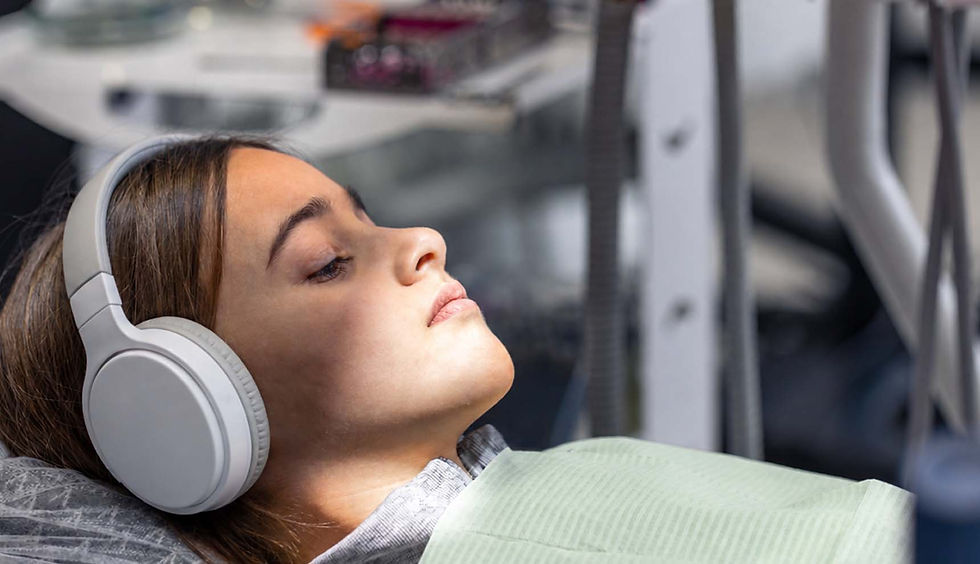
Using simple QR-code access, patients can listen to short guided sessions that incorporate breathwork, visualization, meditation, and frequency-enhanced audio designed to support relaxation and regulation.
The process requires no complex equipment, apps, or changes to clinical workflow.
Patients simply scan, listen, and begin.
Sessions may be used:
In the waiting room
During numbing procedures
During treatment
Following procedures
Between appointments for providers seeking a reset
The goal is not distraction.
It is regulation.
Rather than attempting to ignore stress, the system aims to help individuals work directly with the physiological processes that influence how stress is experienced.

A Different Approach to Patient Experience
Many innovations in dentistry focus on technology, materials, and treatment techniques.
These advancements are important.
But patient experience is influenced by more than procedures alone.
How a person feels before entering the chair matters. How they breathe during treatment matters. How the provider feels after seeing dozens of patients matters.
Nervous system regulation offers a different lens through which to view care—one that recognizes the biological connection between stress, comfort, recovery, and human performance.
Rather than adding complexity, it focuses on helping the body do what it was designed to do when it feels safe.
The Future of Dentistry May Start Before Treatment Begins
As conversations around wellness continue to evolve, attention is increasingly shifting toward the systems that influence health behind the scenes.
Sleep. Recovery. Stress resilience. Emotional regulation.
The nervous system sits at the center of all of them.
For dentistry, this perspective opens new possibilities.
Not because it replaces clinical excellence. But because it supports the physiological environment in which that care takes place.
And if the future of healthcare is becoming more personalized, preventative, and patient-centered, then the future of dentistry may indeed start with the most overlooked organ in the room.
The nervous system.
Calm Chair System is a featured brand in the Biohack Yourself Magazine Summer 2026 issue with Bryan Johnson on the cover, available in stores and online on July 27, 2026.
Disclaimer:
Biohack Yourself Peer Review is an editorial, educational, and entertainment process for sponsored content. It is not a scientific peer review or regulatory evaluation. Please review our full Terms & Conditions and Legal Disclaimers


