
The thyroid gland, located in the neck, is a 2-lobed gland resembling a butterfly and is associated with the throat chakra. It produces iodine-containing hormones, the most important of which are T3 and T4. These hormones regulate many cellular processes in the body, affecting the “metabolic rate”, the speed at which the body’s processes “run.” Too little hormone causes body processes to be sluggish. Too much hormone causes the body’s processes to run too fast.
When thyroid levels are normal, the hormones work in harmony with other hormones, such as growth hormone and insulin, to aid in muscle, bone, and brain growth, energy production, proper digestion, and heart health.
Hypothyroidism In Pets: Hypothyroidism is a common endocrine disorder in dogs, but it is uncommon in cats. It occurs when the thyroid gland produces insufficient levels of thyroid hormones, primarily thyroxine (T4) and triiodothyronine (T3).
Causes Of Hypothyroidism In Pets: In 95% of cases, hypothyroidism is the result of an autoimmune condition called immune-mediated thyroiditis. In this condition, the immune system mistakenly attacks the thyroid gland, destroying it, resulting in thyroid gland dysfunction. Other potential causes include:
- Idiopathic Thyroid Gland Atrophy: The thyroid tissue gradually shrinks and becomes less functional over time.
- Congenital Hypothyroidism: Rarely, some pets are born with hypothyroidism due to developmental issues with the thyroid gland.
- Thyroid Tumors: Although rare, thyroid or pituitary tumors can disrupt normal thyroid hormone production.
Risk Factors:
- Breed Predisposition: Certain breeds are more prone to hypothyroidism, including Golden Retrievers, Doberman Pinschers, Cocker Spaniels, and Dachshunds.
- Age: Hypothyroidism typically occurs in middle-aged dogs, most commonly between 4 to 10 years old.
- Gender: Females may be at a higher risk than males.
- Genetics: If a pet has a family history of hypothyroidism, they may be more likely to develop the condition, particularly if their lifestyle (diet, deficiencies, exposure to toxicities) is similar.
- Drugs: Such as glucocorticoids, can reduce blood levels of T4 but not result in clinical expression of hypothyroidism.
Symptoms:
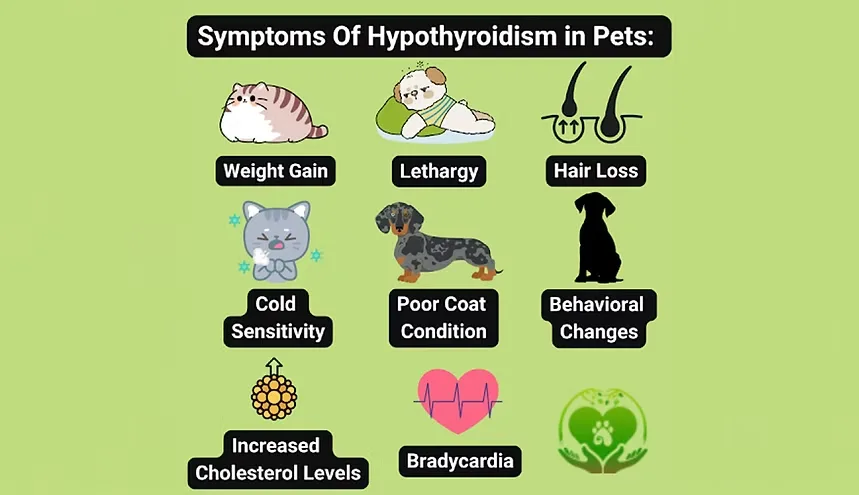
Hypothyroidism is a progressive condition, insidious in its onset. Symptoms can vary in severity. Common signs include:
- Weight Gain: Despite a normal or reduced appetite, pets with hypothyroidism often gain weight due to a slowed metabolism.
- Lethargy: Affected pets may become unusually tired, less active, and reluctant to engage in play or exercise.
- Hair Loss and Skin Issues: Hypothyroid pets may experience hair thinning, particularly on their flanks and tail. Dry, flaky skin and frequent skin infections are also common.
- Cold Sensitivity: Pets may seem more sensitive to cold temperatures and seek warmth.
- Poor Coat Condition: Fur may become brittle, dry, or greasy.
- Behavioral Changes: Some pets with hypothyroidism may show increased irritability or depression.
- Increased Cholesterol Levels: Elevated cholesterol may be detected during routine blood work.
- Bradycardia (Slow Heart Rate): This can be detected by a veterinarian during a physical exam.
- Rare clinical signs and syndromes that have been associated with hypothyroidism include megaesophagus, vestibular dysfunction, facial nerve paralysis, and atherosclerosis.
Diagnosing Hypothyroidism
Diagnosing involves a thorough veterinary examination, identifying a combination of clinical signs, appropriate blood tests to evaluate metabolic function (including thyroid function), and identifying deficiencies and toxicities.
The most common diagnostic tests include:
- Complete CBC, Blood Chemistries, Urinalysis: Because symptoms can mimic other diseases, a thorough workup is required to rule out other differentials.
- Total T4 (TT4) and Free T4 by equilibrium dialysis (fT4 by ED) Levels: These tests measure the amount of thyroid hormone in the blood. TT4 measures the bound and unbound thyroxine in the blood. fT4 by ED measures the free thyroxine (the active form) in the blood and is more specific than TT4. Though low levels are suspicious of hypothyroidism, further testing is required to confirm the diagnosis.
- Thyroid Stimulating Hormone (TSH) Test: Elevated levels of TSH are often present in pets with hypothyroidism, as the pituitary gland tries to stimulate the thyroid gland to produce more hormones.
- Anti-Thyroglobulin Autoantibody Test: Is used to detect antibodies against thyroglobulin, a protein involved in thyroid hormone production. High levels of these antibodies can indicate lymphocytic thyroiditis, a condition that can destroy the thyroid tissue and lead to hypothyroidism. In cases of immune-mediated thyroiditis, the presence of autoantibodies can confirm the diagnosis.
- Ultrasound and Biopsy If Indicated: In rare cases, imaging or tissue samples may be required to rule out thyroid tumors or other abnormalities such as thyroid cysts, thyroid nodules, thyroiditis, ectopic thyroid tissue, thyroid atrophy, hemorrhage or hematoma, and calcification or mineralization.
Not all dogs with low TT4 are hypothyroid. Dogs challenged with chronic illnesses may develop euthyroid sick syndrome and have low thyroid hormone levels, but not be truly hypothyroid.
A TSH stimulation test may be performed to see if the thyroid gland can respond. TSH is administered as an injection to the pe,t and the thyroid response is measured.
TSH levels can be elevated in conditions other than hypothyroidism. It is critical to evaluate the combination of thyroid tests along with the dog’s clinical signs and other appropriate diagnostic tests before concluding a diagnosis of hypothyroidism.
Hypothyroidism in Pets: Symptoms
Symptoms can vary in severity.
Western Medicine Treatment Approaches
Once diagnosed, hypothyroidism is typically managed with lifelong medication. The most common treatment is levothyroxine, a synthetic form of thyroid hormone that replaces the hormone the thyroid is no longer producing. Dosage is individualized based on the pet’s size, weight, and response to treatment, and regular blood tests are necessary to monitor thyroid hormone levels and adjust the dosage accordingly.
Holistic And Integrative Approaches To Manage Or Prevent Hypothyroidism
While traditional allopathic medical treatments focus on supplementing with a synthetic thyroid hormone replacement (symptom management), the integrative approach also addresses the root cause(s) of the issue that led to the autoimmune disease:
- Testing For Nutrient Deficiency and Toxicity: (A list of appropriate tests is discussed in the Empowered Pet Parent Course)
- Test for and resolve systemic inflammation: (This is discussed in depth in the Empowered Pet Parent Course)
- Focus on repairing “leaky gut”: which will reduce the influx of foreign material that triggers the liver to release the cytokine storm. Click here For More Information!
- Detoxification of the 6 organs of elimination: Kidney, colon, lungs, liver, skin and lymphatic/fascia. Click Here For More!
- Acupuncture: In some cases, acupuncture may help stimulate the thyroid and support overall hormonal balance.
- Feed A Species-Appropriate Diet: A diet that mimics what pets would have eaten in the wild before man intervened. Carnivores are designed to eat a meat diet in the state they killed it in (raw). The diet must be grass-fed/grass-finished and have the proper balance of meat, fat, bone, and organ meat. With proper digestion, the animal digests and breaks down protein to amino acids that are used to produce vital hormones.
- Supplementation for Thyroid Health: Certain supplements may support thyroid health and help prevent thyroid dysfunction:
- Omega-3 Fatty Acids: Flaxseed oil is known to reduce inflammation and support cellular function, which includes hormone production and thyroid health. Click Here for product recommendations!
- Pumpkin Seed Oil: Is rich in zinc and antioxidants.
- Vitamin D: Supports immune function and can help reduce inflammation that might trigger autoimmune thyroid disease (thyroiditis). Testing for Vitamin D deficiency is vitally important before supplementing. Feeding a grass-fed and grass-finished raw meat diet is important in the prevention of Vitamin D deficiency.
- Regular exercise that includes some high intensity (if appropriate for the pet’s health stage) is important for metabolic, cardiovascular and lymphatic health, along with musculoskeletal strength.
- Weight Management: Overweight pets are more prone to thyroid problems due to increased strain on their metabolic system and higher levels of inflammation.
- Reducing Stress: Chronic stress can impact thyroid health by causing persistent elevations in cortisol levels, which in turn affect other hormones, including thyroid hormones.
Practices to reduce stress include:Empty heading
- Mental Enrichment: Provide your pet with stimulating activities like puzzle toys, regular playtime, and interaction to keep their mind sharp and reduce stress.
- Massage and Fascia Decompression: Techniques like gentle massage or Fascia Decompression can help reduce stress and promote overall well-being.
- Avoiding Environmental Toxins: Exposure to pollutants, pesticides, and chemicals like xenoestrogens (endocrine-disrupting chemicals used in many laundry soaps and body care products) that affect hormone levels can increase the burden on the thyroid and immune system. Minimize exposure to these by using natural cleaning products, organic, and “green” lawn care. (Click Here for nontoxic cleaning and laundry options).
- Avoid Plastic Bowls: Chemicals in plastics, such as BPA, can disrupt hormone function. Opt for stainless steel, ceramic, or glass bowls.
- Pest Control (flea and tick prevention vs lawn and home pest control): This topic is too complex for a short answer and will be addressed in a separate post!
- Choose Organic and Non-Toxic Products: Whether it’s food, cleaning supplies, or grooming products, opt for organic or chemical-free alternatives to minimize exposure to harmful substances.
Indoor Air Quality: Air Purifiers vs. Air Scrubbers — A Quick Breakdown:
When we think of indoor air pollution, mold often comes to mind, but it’s just one of many threats. Volatile Organic Compounds (VOCs) from paints, furniture, and cleaning products; formaldehyde from pressed wood; pollen, pet dander, dust mites, bacteria, viruses, smoke particles, and even off-gassing from plastics all contribute to indoor air toxicity.
Over time, these airborne toxins can affect respiratory health, hormone balance, immune function, and even neurological well-being, especially for sensitive pets and people. Air purifiers are common in homes and use HEPA filters to trap dust, pollen, and pet dander. However, most only circulate air 1–2 times per hour and aren’t great at handling serious pollution.
Air scrubbers are more powerful. They rapidly cycle large volumes of air (3–4+ times/hour), capture more types of pollutants, and are built for heavy-duty cleaning—originally used in industrial settings. Jaspr took industrial air scrubber tech and redesigned it for home use—quiet, sleek, and highly effective. For the best in-home air quality, select Jaspr. Explore Jaspr here
- Supporting Immune Health: Since autoimmune thyroiditis (when the immune system attacks the thyroid gland) is the most common cause of hypothyroidism in pets, supporting a healthy immune function can play a preventive role. Immune support can be achieved through:
- Probiotics: A healthy gut microbiome plays a crucial role in immune function. Supplementing the diet with organic fermented foods (homemade kefir or sauerkraut juice) is better than using commercial supplements that over time may inhibit the microbiome diversity.
- Herbal Immune Boosters: Herbs like Astragalus may support immune health and reduce the likelihood of autoimmune diseases. Try EvoLove Herbal Click Here! and Astragalus Click Here!
- Antioxidants: Antioxidant-rich foods (such as Cold Pressed Pumpkin Seed Oil, Five Seed Oil, Flaxseed Oil, Black Cumin Seed Oil, Milk Thistle Oil, Curcumin, Hydrogen Infused water, etc.) can help fight oxidative stress, which in turn supports thyroid and overall health.

Hypothyroidism is typically managed with lifelong medication
An integrative approach addresses the root cause(s) of the issue.
Cautions for dogs diagnosed with hypothyroidism:
- Iodine: Though Iodine is crucial for thyroid hormone production, supplementing with iodine-rich foods like seaweed (bladderwrack or kelp) may be contraindicated if the dog is on a thyroid medication, as it can lead to iodine excess and interfere with medication. Consult a qualified veterinarian before supplementing the pet's diet.
- Avoid Processed Foods (Kibble and Can): Many commercial pet foods are full of fillers, chemicals, and preservatives that can disrupt hormonal balance and lead to inflammation. Choose high-quality, whole foods to nourish your pet’s body and endocrine system.
- Avoid Raw Cruciferous Vegetables: These include broccoli, kale, cabbage, and cauliflower, as they contain goitrogens that may interfere with thyroid hormone production. These can be fed in moderation if organic and steamed, but they are not part of a species-appropriate diet. Supplementing with the essential vitamins and minerals provides a safe and effective method for delivering nutrients.
- Fish Oils: Though they are a popular choice for supplying fatty acids, they’re often rancid (and toxic), and may contain high levels of mercury. Click Here For My Recommendation!
Learn how to proactively support your pet’s health with the right nutrition, detoxification, and holistic health practices.
Being informed about true “health care” allows you to support your pets’ health. Proper education is the critical key to success, ensuring the ability to be empowered to make informed decisions so your pet can live a long, healthy life, free from preventable conditions.
Take the Empowered Pet Parent Course Today!
References:
- Peterson, M. E. (2012). “Hypothyroidism in Dogs.” Veterinary Clinics of North America: Small Animal Practice, 42(5), 1057-1071.
- Lee, L., & Côté, E. (2019). “Endocrinology of Dogs and Cats.” Textbook of Veterinary Internal Medicine, 8th Edition.
- Welsh, R. D., & Miller, M. (2016). “Management of Canine Hypothyroidism.” Journal of the American Animal Hospital Association, 52(3), 163-171.
Disclaimer:
Contributor content reflects the personal views and experiences of the author and does not necessarily represent the views of Biohack Yourself Media LLC, Lolli Brands Entertainment LLC, or any of their affiliates. Content is provided for editorial, educational, and entertainment purposes only. It is not medical or dental advice. Always consult qualified professionals before making health decisions. By reading, you agree to hold us harmless for reliance on this material. See full disclaimers at www.biohackyourself.com/termsanddisclaimers