There is a lot of mixed messaging about women’s nutrition. Conflicting articles about carbohydrate, protein, and fat requirements. Numerous posts about 1,200-calorie-a-day diets leave many of us confused about what to eat and why.
This is not one of these articles. Our mission here at C60 Power is to share scientifically backed information that can help you make educated decisions about health, lifestyle, and wellness.
Women’s nutrition is a big topic that we can’t cover entirely in one article. In this article, we focus on the principles of smart, healthy nutrition for women:
- Embracing whole nutrition and balanced living
- Essential nutritional needs for women
- Every day women’s nutrition tips and advice
While nutritional needs vary as we age, embracing whole foods, balanced supplements, and a lifestyle that nourishes the mind and body can lead to lasting wellness.
Embracing Whole Nutrition for Balanced Living
Healthy eating, whole nutrition, and balanced living are cornerstones of your health and wellness. Knowing what to eat and why has become complicated and confusing.
Here are the truths we know about women’s nutrition, health, and wellness: [1], [2], [3]
- Focus on food quality and whole nutrition. There is a big difference between drinking apple juice and eating an apple. The less processed your food choices, the better they are for your whole-body health.
- Stop counting your calories. The old logic that a “calorie is a calorie” is not true. Your metabolism is unique, so how you burn and use calories is not the same as your friends, family members, or strangers. Your gut microbiome, body composition, resting metabolic rate, food choices, and underlying health conditions all influence how your body uses calories.
- Exercise, stress, and sleep are integral to your whole-body health. Think of exercise, stress, and sleep as three pillars of health – they directly influence key physiological processes, including metabolism, immune function, hormone regulation, cardiovascular and blood sugar health, and brain function and health.
- Mental health has deep-reaching impacts on your physical health. Depression and stress may increase your potential for developing health conditions, including heart, hormone, digestive, immune, and diabetes, and impact your sleep quality, social interaction, and accelerate biological aging.
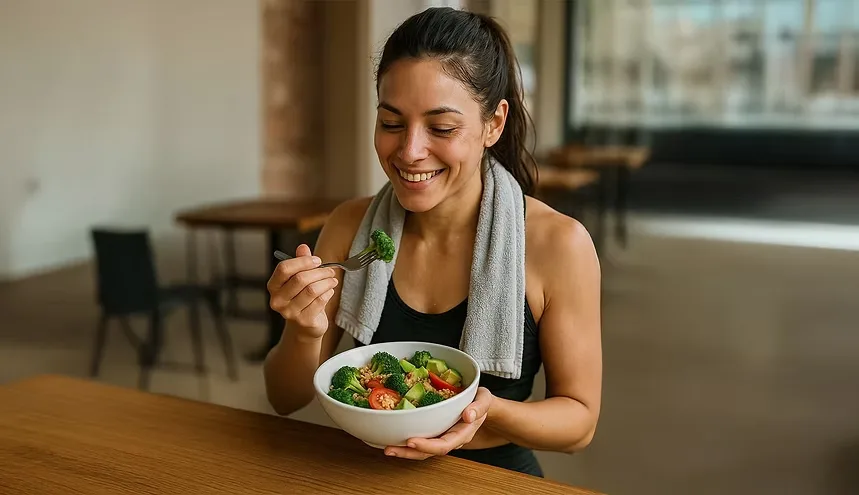
Embracing Whole Nutrition
Fuel your body, support your mind—embrace balanced nutrition for every stage of womanhood.
Essential Women’s Nutrition Requirements
“Women are not small men,” says Dr. Stacy Sims. [4]
Dr. Sims, an environmental exercise physiologist and nutrition scientist, has famously challenged the long-held assumption that women are simply smaller versions of men when it comes to exercise, nutrition, and medicine. Her central argument is that there are significant physiological differences between men and women that need to be accounted for, rather than generalizing findings from studies conducted on men to women. 4, [5]
Dr. Sims stresses that the traditional approaches and thinking about nutrition fail to consider the unique physiology of women, including the menstrual cycle and its associated hormonal fluctuations, which can significantly impact physical and nutritional needs. 4, 5
Ensure you’re getting these key nutrients through your diet and supplements: [6], [7], [8]
- Protein: As you age, you need adequate protein to maintain muscle mass and strength, which can decline with age. Protein is essential for tissue repair, immune function, and hormone production.
- Fiber: Fiber is important for digestive and heart health in women. It can help prevent constipation, lower cholesterol, and regulate blood sugar levels.
- Vitamin B12: B12 is crucial for women to prevent anemia, which is more common in women due to menstrual blood loss. B12 supports red blood cell formation and neurological function.
- Magnesium: Magnesium is vital for bone health, nerve function, and muscle recovery in women. It may also help alleviate PMS symptoms and migraines.
- Water: Proper hydration is especially important for women to support metabolism, circulation, and temperature regulation, particularly during menstrual cycles and pregnancy.
- Folate: Folate is critical for women of childbearing age to prevent neural tube defects in pregnancy. It also plays a role in red blood cell formation.
- Iron: Iron needs are higher in women due to menstrual blood loss. Iron deficiency anemia may cause fatigue, weakness, and impaired immune function.
- Calcium: Calcium is essential for women to build and maintain strong bones, especially during the teen years and after menopause, when bone loss accelerates.
- Vitamin B6: B6 is important for women to support red blood cell production, immune function, and hormone regulation.
- Zinc: Zinc is crucial for women's reproductive health, DNA synthesis, and wound healing.
- Iodine: Iodine is vital for thyroid health and proper fetal development during pregnancy.
- Choline: Choline supports liver function, brain development, and may reduce the risk of neural tube defects.
You have unique nutritional needs across your lifespan, requiring a focus on getting adequate amounts of protein, fiber, vitamins, and minerals from a varied, nutrient-dense diet.
6 Women’s Nutrition Tips for Whole-Body Health and Wellness
It is hard to cut through the noise and confusing information about women’s nutrition and whole-body health and wellness.We want you to remember these 6 key nutrition and lifestyle tips: 1, 3, [9], [10], [11], [12], [13]
1. Regular Physical Activity
Engage in at least 150 minutes of moderate-intensity aerobic exercise per week, along with muscle-strengthening activities on two or more days.
Incorporate low-impact exercises like yoga, aerobics, and weight training, especially as you age, to support muscle mass and bone density.
2. Balanced NutritionConsume a diet rich in fruits, vegetables, whole grains, lean proteins, and healthy fats while limiting processed foods, sugars, and saturated fats.Ensure you’re getting plenty of fiber from plant-based foods such as vegetables, legumes, fruits, whole grains, nuts, and seeds.Stay hydrated by drinking sufficient water throughout the day.Ensure adequate intake of iron from sources including lean red meat, spinach, lentils, and fortified cereals to help minimize the potential for iron deficiency anemia. Discuss iron supplements with your healthcare practitioner if you struggle with energy.Consume calcium-rich foods, including dairy, leafy greens, and fortified plant milks, to help support bone health and minimize the potential for osteoporosis. If possible, talk to your healthcare practitioner about a bone density scan.Remember to get adequate vitamin D from sunlight, fatty fish, egg yolks, and fortified foods to help support calcium absorption and to support immune, antioxidant, and muscle function.
Consumer folate or folic acid from natural sources such as spinach, oranges, beans, fortified grains, and supplements. Folic acid intake is particularly important if you’re pregnant or trying to become pregnant.
3. Stress Management
Practice stress-reducing techniques such as mindfulness, meditation, yoga, or deep breathing exercises to promote mental well-being.Don’t be afraid to say “no”. Remember, you cannot do it all. You need to prioritize yourself.
4. Adequate SleepAim for 7-9 hours of quality sleep per night. Consistent restful sleep is crucial for physical and mental health.To help support improved sleep, practice deep breathing, journaling before bed, and limit screen time one to two hours before bed.
5. Avoid Harmful SubstancesQuit smoking and avoid exposure to secondhand smoke to reduce exposure to harmful toxins, which may contribute to cardiovascular, immune, and other health conditions, including oxidative stress. Limit alcohol intake to moderate levels.
6. Preventive CareSchedule regular check-ups, screenings, and age-appropriate vaccinations for early detection and prevention.Maintaining healthy social connections and relationships are important for mental and emotional well-being.
It's an exciting time for women’s nutrition and health – more and more researchers, scientists, and health organizations are devoting time and energy to learning how to support your unique needs.
We encourage you to continue your reading and learning about all aspects of women’s nutrition and health. The more you know, the better questions you can ask, and the better decisions you can make about your personal health and wellness.

Whole-Body Health and Wellness
Prioritizing whole-body health starts with smart, science-backed nutrition choices tailored for women.
‡ These statements have not been evaluated by the Food and Drug Administration. These products are not intended to diagnose, treat, cure, mitigate, or prevent any disease. Individual results may vary.
Ken Swartz, MS is the co-founder, Chairman Emeritus, and former Chief Science Officer at C60 Power, a health and wellness company committed to delivering the highest quality Carbon 60 products available. Ken earned a Master of Science degree from the University of Colorado at Denver and a Bachelor of Science in Economics from Arizona State University.
References
[1] Harvard Health Publishing. “Stop counting calories.” (Accessed May 8, 2024) https://www.health.harvard.edu/staying-healthy/stop-counting-calories
[2] Gunnars, Kris. “6 Reasons Why a Calorie Is Not a Calorie.” Healthline.com (Accessed May 8, 2024) https://www.healthline.com/nutrition/6-reasons-why-a-calorie-is-not-a-calorie
[3] Green, Rachael. “The Connection Between Mental Health and Physical health.” Verywellmind.com (Accessed May 8, 2024) https://www.verywellmind.com/the-mental-and-physical-health-connection-7255857
[4] TED. “Women are Not Small Men: a paradigm shift in the science of nutrition.” (Accessed May 13, 2024) https://www.ted.com/talks/stacy_sims_women_are_not_small_men_a_paradigm_shift_in_the_science_of_nutrition
[5] Radzicki McManus, Melanie. “Women need to exercise and eat differently than men. Here’s how.” CNN.com (Accessed May 13, 2024) https://www.cnn.com/2024/05/02/health/women-fitness-training-nutrition-wellness/index.html
[6] Pike, Alyssa. “Essential Nutrients for Adult Women, in Each Decade of Life.” FoodInsight.org (Accessed May 13, 2024) https://foodinsight.org/what-every-woman-should-know-about-food-and-their-health/
[7] Henley EC, Bahl S. “Nutrition across the woman's life cycle. Special emphasis on pregnancy.” Nurs Clin North Am. 1982 Mar;17(1):99-110. https://pubmed.ncbi.nlm.nih.gov/6919030/
[8] PCRM Nutrition Guide for Clinicians. “Nutritional Requirements Throughout the Life Cycle.” (Accessed May 13, 2024) https://nutritionguide.pcrm.org/nutritionguide/view/Nutrition_Guide_for_Clinicians/1342043/all/Nutritional_Requirements_throughout_the_Life_Cycle
[9] Desai, Shilpa. “What Women Should Know at All Ages to Keep Health.” Loyolamedicine.org (Accessed May 13, 2024) https://www.loyolamedicine.org/about-us/article/womens-health-tips-all-ages
[10] Better Health Channel. “Physical activity for women.” (Accessed May 13, 2024) https://www.betterhealth.vic.gov.au/health/healthyliving/physical-activity-for-women
[11] Women’s Healthcare of Princeton. “Six Steps Women Can Take to Improve Their Health at Any Age.” (Accessed May 13, 2024) https://www.princetongyn.com/article/six-steps-women-can-take-to-improve-their-health-at-any-age
[12] Hatton, Pamela. “Health Promotion – Women’s nutrition needs.” Canada.ca (Accessed May 13, 2024) https://www.canada.ca/en/department-national-defence/corporate/news/regional-news/western-sentinel/2021/03/womens-nutrition-needs.html
[13] Ba Dopke et al. “What the World Needs Now: Lifestyle Medicine for All Women.” Am J Lifestyle Med. 2021 Jul 18;17(1):97-107. https://www.ncbi.nlm.nih.gov/pmc/articles/PMC9830235/
Disclaimer:
Contributor content reflects the personal views and experiences of the author and does not necessarily represent the views of Biohack Yourself Media LLC, Lolli Brands Entertainment LLC, or any of their affiliates. Content is provided for editorial, educational, and entertainment purposes only. It is not medical or dental advice. Always consult qualified professionals before making health decisions. By reading, you agree to hold us harmless for reliance on this material. See full disclaimers at www.biohackyourself.com/termsanddisclaimers