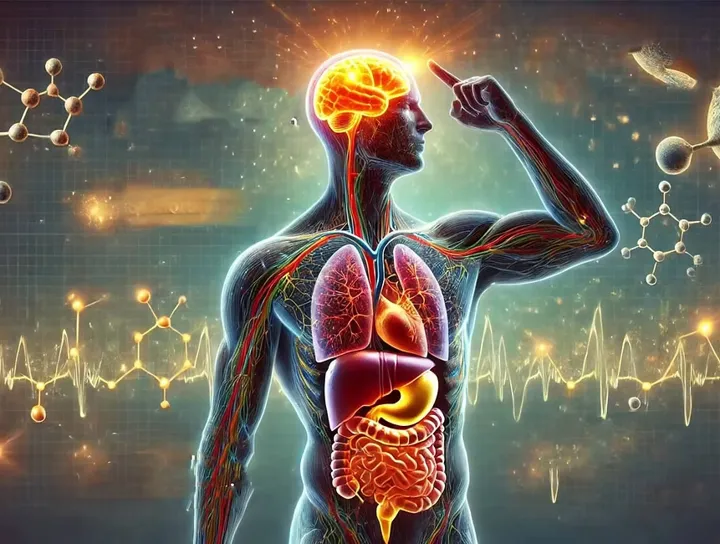
Learn what oxidative stress is and how it tells us a lot about what is going on deep at the cellular level. Understand how antioxidants and lifestyle factors can support your cellular health and overall well-being.
KEN SWARTZ, MS 2025
What Is Oxidative Stress?
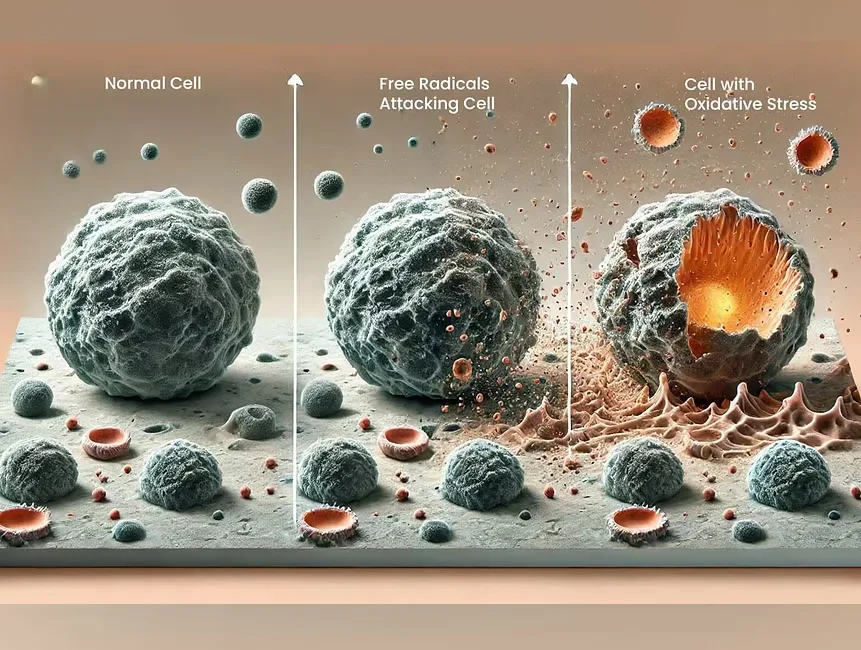
An imbalance between the number of free radicals (oxidants) and antioxidants in the body is known as oxidative stress.1 Since our cells are constantly undergoing change daily, it is no secret that the process of cellular oxidation is also occurring. Let’s find out a little more about this cellular process.
Oxidation means removing electrons chemically from an atom. There is sometimes an upset among the atoms, especially the unstable ones. When this occurs, that unstable atom takes an electron from another atom causing instability or oxidation.2
Did you know that this oxidative process is actually necessary for supporting certain functions involved in immunity (defending us from bacteria and other pathogens) and other processes?3 Under normal conditions antioxidants help to neutralize these free radicals to halt or prevent further damage.
Things can turn problematic when excess free radicals continue to navigate their way through the body causing damage to cells, tissues, and organs. Over time this leads to chronic oxidative stress (COS) and may result in numerous inflammatory conditions.4

Free Radical Production
Wondering where these free radicals come from? Well, free radicals are produced either endogenously (internally by the body) or from being exposed to certain exogenous (external) sources.
Endogenous Sources
As you may remember, the result of normal cellular metabolism is the natural production of free radicals.5 Free radicals are also products of what’s happening in the cells not only as a result of metabolism, but also as a result of aging, mental stress, excessive exercise, and inflammation.6
Exogenous Sources
Some external factors that may impact our cell’s health can be the exposure we have to certain environmental or external elements. For example, exposure to heavy metals, daily environmental pollutants, chemicals, pesticides, and even certain medications may cause our bodies to handle these exposures and produce free radicals.6
Other exogenous sources that are on the not-so-healthy list and may impact our cells’ health include exposure to normal environmental pollutants, heavy metals, certain medications, chemical solvents, exposure to the sun’s harmful UV rays, alcohol consumption, smoking tobacco cigarettes and vaping (e-cigarettes).6,7 In fact, a study that was published in JAMA Pediatrics, demonstrated that young people with no history of smoking tobacco cigarettes or e-cigarettes had quite an increase in their cellular oxidative stress (COS) levels after just a 30-minute vaping session.7 Individuals engaged in long-term tobacco cigarette and electric cigarette use also showed increased COS levels.
Let’s take a closer look at the importance of antioxidants and the role they play in targeting free radicals and oxidative stress to support cellular health.
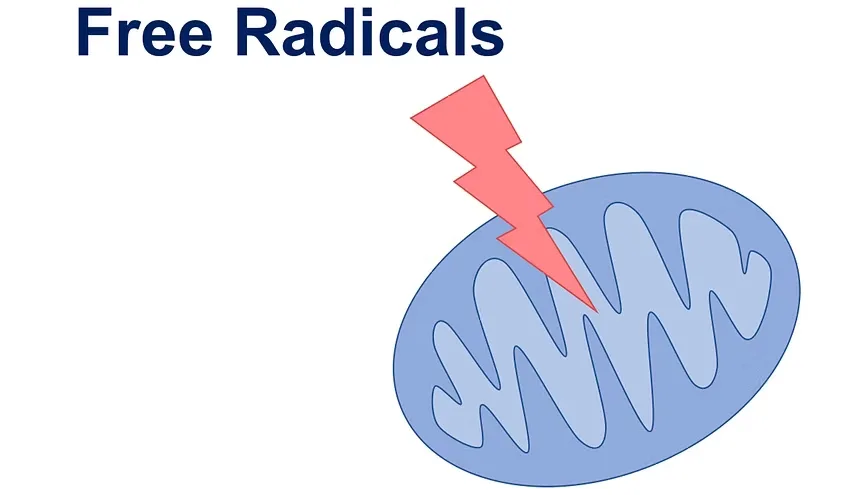
Free radicals are unstable molecules that can damage cells.
Dw001/ CC-4.0
Nutrition, Antioxidants and Cellular Support
Dietary Antioxidants
Since antioxidants are stable molecules they can afford to donate an electron to free radicals and neutralize it. Adding antioxidant-rich foods to your daily diet is wise and may help to keep oxidative stress at bay or prevent the chain reaction of cellular damage. Antioxidants are found in a variety of foods and spices too. Let’s check it out below.
- Fruits. Top fruit choices rich in antioxidants include strawberries, blueberries, raspberries, blackberries, avocados, red grapes, cantaloupe, watermelon, papaya, tomatoes, and pomegranates.
- Vegetables and Legumes. Robust antioxidant and phytonutrient-rich vegetables include artichokes, broccoli, cauliflower, carrots, spinach, and legumes such as black beans, red kidney, and pinto beans make the list.
- Spices. Not sure how many of you think about spices providing nutrients, but they do! Ginger, cinnamon, turmeric, paprika, chili powder, garlic, parsley, and oregano just to name a few, not only add flavor to your favorite dishes, but also a boost of protective antioxidants.
- Variety. No food or food groups can provide all that we need to support our health. Eating a balanced diet daily, by selecting foods from all of the food groups and limiting processed foods will help to provide a balanced intake and nutrients that provide antioxidant support like vitamin C, E, and beta carotene. If you feel as if your diet has some gaps and you are concerned, reaching out to your healthcare provider or a Registered Dietitian is recommended. They can help to assess what you need, and if your diet warrants dietary supplementation.
Other Key Antioxidants
Some other antioxidants like glutathione and ubiquinol are considered to play a significant role in combatting oxidative stress in the body.
- Glutathione. Glutathione is considered a powerful antioxidant found in most cells in the body. It supports cellular function and provides protection from free radicals. It also plays a crucial role in moving heavy metals like mercury out of the brain and the cells and protecting us from other toxic metals and organic pollutants which are all contributors to oxidative stress.8
- Ubiquinol. Ubiquinol is the active antioxidant form of CoQ10. Our body naturally makes CoQ10 (ubiquinone) but as we get older this production starts to dwindle. Thankfully, we can obtain this nutrient through foods considered good sources of ubiquinol like nuts (almonds and peanuts), sesame seeds, meats, and fatty fish (tuna, salmon and sardines)9. Because this nutrient is only in a limited number of foods, you may want to speak with your healthcare provider about supplementing your diet.
Lifestyle Factors — Managing Cellular Balance
Throughout this blog we discussed what oxidative stress is, and ways to support cellular health through diet. In addition to a healthy, immune-supporting whole foods diet, there are also other factors that can help with controlling oxidative stress.4,10,11 Here are a few to check off your list.
- Moderate exercise. Engaging in regular, moderate physical activity is associated with a lower resting metabolic rate, higher antioxidant activity in the body, and protection against oxidation of proteins and cells’ DNA. Another benefit of moderate exercise is healthy glucose management and a reduction of oxidative stress and inflammation.10
- Get your sleep. Not enough sleep or impaired sleeping habits may be responsible for the role oxidative stress and inflammation play for some individuals. We need at least 7-9 hours each night to promote proper brain and body functioning,
- Avoid smoking. Stay clear of using tobacco cigarettes or electric cigarettes for a variety of health reasons including the negative impact smoking has on cellular health.
- Monitor your alcohol consumption. If you choose to have an occasional alcoholic beverage, then keep it at that — once in a while.
- Guard against the sun’s rays. If you’re going to be outside be certain to limit your sun exposure and use an appropriate SPF to minimize the damage to your cells and skin.
These statements have not been evaluated by the Food and Drug Administration. These products are not intended to diagnose, treat, cure, mitigate, or prevent any disease. Individual results may vary. The information provided in this blog is for educational and informational purposes only and should not be construed as medical advice.
Cells
skylarvision/ Pixabay
References:
- Lushchak, Volodymyr I., and Kenneth B. Storey. “Oxidative Stress Concept Updated: Definitions, Classifications, and Regulatory Pathways Implicated ”. EXCLI Journal, vol. 20, May 2021, pp. 956-67, doi:10.17179/excli2021-3596.
- Chaudhary, Priya et al. “Oxidative stress, free radicals and antioxidants: potential crosstalk in the pathophysiology of human diseases.” Frontiers in chemistry vol. 11 1158198. 10 May. 2023, doi:10.3389/fchem.2023.1158198.
- Azzi, Angelo. “Oxidative Stress: What Is It? Can It Be Measured? Where Is It Located? Can It Be Good or Bad? Can It Be Prevented? Can It Be Cured?.” Antioxidants (Basel, Switzerland) vol. 11,8 1431. 23 Jul. 2022, doi:10.3390/antiox11081431.
- Cleveland Clinic. “What Is Oxidative Stress?” Cleveland Clinic, 29 Feb. 2024, my.clevelandclinic.org/health/articles/oxidative-stress. https://my.clevelandclinic.org/health/articles/oxidative-stress . (Accessed June 3 2024).
- Phaniendra, Alugoju et al. “Free radicals: properties, sources, targets, and their implication in various diseases.” Indian journal of clinical biochemistry : IJCB vol. 30,1 (2015): 11-26. doi:10.1007/s12291-014-0446-0.
- Pizzino, Gabriele et al. “Oxidative Stress: Harms and Benefits for Human Health.” Oxidative medicine and cellular longevity vol. 2017 (2017): 8416763. doi:10.1155/2017/8416763.
- Kelesidis, Theodoros, et al. “Association of 1 Vaping Session with Cellular Oxidative Stress in Otherwise Healthy Young People with No History of Smoking or Vaping.” JAMA Pediatrics, vol. 175, no. 11, 1 Nov. 2021, p. 1174, https://doi.org/10.1001/jamapediatrics.2021.2351. https://jamanetwork.com/journals/jamapediatrics/fullarticle/2782800?utm_campaign=articlePDF&utm_medium=articlePDFlink&utm_source=articlePDF&utm_content=jamapediatrics.2021.2351 .
- Pizzorno, Joseph. “Glutathione!.” Integrative medicine (Encinitas, Calif.) vol. 13,1 (2014): 8-12. https://www.ncbi.nlm.nih.gov/pmc/articles/PMC4684116/ .
- Schulman, Risa. “Which Common Foods are Natural Sources of Ubiquinol CoQ10?” 2024, https://ubiquinol.org/foods-with-ubiquinol . (Accessed June 3, 2024).
- Poljsak, B. “Strategies for reducing or preventing the generation of oxidative stress.” Oxidative medicine and cellular longevity vol. 2011 (2011): 194586. doi:10.1155/2011/194586. https://www.ncbi.nlm.nih.gov/pmc/articles/PMC3236599/ .
- Atrooz, Fatin ,et al. “Chapter Eight - Sleep deprivation, oxidative stress and inflammation.” Advances in Protein Chemistry and Structural Biology, vol.119, 2020, pp.309-336, https://doi.org/10.1016/bs.apcsb.2019.03.001. (https://www.sciencedirect.com/science/article/pii/S187616231930029X) .
Disclaimer:
Contributor content reflects the personal views and experiences of the author and does not necessarily represent the views of Biohack Yourself Media LLC, Lolli Brands Entertainment LLC, or any of their affiliates. Content is provided for editorial, educational, and entertainment purposes only. It is not medical or dental advice. Always consult qualified professionals before making health decisions. By reading, you agree to hold us harmless for reliance on this material. See full disclaimers at www.biohackyourself.com/termsanddisclaimers