

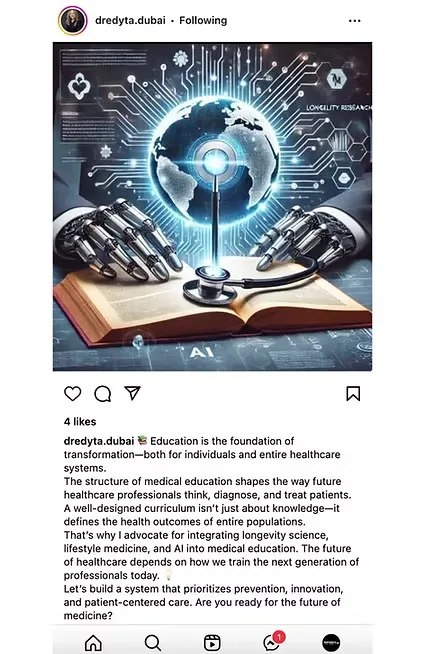
Education is the cornerstone of transformation—both for individuals and healthcare systems. Dr. Edyta Skibinska, a leader in healthcare education, curriculum development and public health, believes that the way we train future professionals defines the quality of care they provide. A well-structured curriculum, along with comprehensive training, shapes how doctors think, diagnose, and treat, ultimately impacting global health outcomes.
But medical education should not be limited to physicians alone. Every individual has the power to influence their health through informed choices. "Empowering people to take control of their health and longevity is at the heart of my work," says Dr. Edyta. Understanding the science behind prevention, longevity, and health optimization is key to making sound health decisions.
To reshape the future of healthcare, she advocates for an educational revolution—one that integrates longevity science, lifestyle medicine, and artificial intelligence (AI) at its core. This shift equips healthcare professionals with the tools to not only treat disease but prevent it, while also empowering individuals to take ownership of their well-being.
The Shift to Preventive and Personalized Care
Traditional medicine focuses on treating illness, but the future demands a shift toward prevention and personalized strategies. Advances in genetic testing, longevity science, and AI-driven analytics allow for early disease prediction and intervention.
Why It Matters:
- Chronic diseases can be significantly reduced through proactive prevention.
- Treatments will be tailored to individual genetics and lifestyles.
- Patients will be more engaged in their own healthcare journey.
Managing Chronic Disease Through Lifestyle Medicine
Chronic conditions like diabetes, hypertension, and heart disease are often rooted in poor lifestyle choices. Medical education must integrate evidence-based lifestyle interventions—nutrition, sleep, stress management, and exercise—into standard care.
Potential Impact:
- Reduced reliance on pharmaceuticals for chronic disease management.
- Improved patient quality of life and long-term health outcomes.
- Lower healthcare costs due to fewer complications.
Extending Healthspan, Not Just Lifespan
Medical advancements have increased lifespan, but often at the cost of prolonged illness. The real goal should be to extend healthspan—the number of years lived in good health.
Key Benefits:
- Longer, healthier, and more productive lives.
- Reduced burden on healthcare systems from age-related diseases.
- A redefined approach to aging and retirement.
AI-Powered Diagnostics: A New Era of Precision Medicine
AI is revolutionizing diagnostics, offering earlier and more accurate disease detection. By training healthcare professionals in AI applications, we enhance their ability to analyze complex health data and detect patterns beyond human capability.
Benefits:
- Faster, more precise diagnoses.
- Fewer misdiagnoses and unnecessary procedures.
- Optimized healthcare resource utilization, reducing inefficiencies.

Education is the cornerstone of transformation for healthcare systems.
Empowering Patients Through Health Education
Doctors should not only treat but also educate, guiding patients to make informed choices. When individuals understand lifestyle medicine and quantum medicine, they become proactive in disease prevention and health optimization.
Outcomes:
- Greater patient adherence to healthy behaviors.
- Stronger doctor-patient relationships built on knowledge and trust.
- Sustainable, long-term improvements in public health.
Optimizing Healthcare Resources Through Prevention
A preventive healthcare model is more efficient and cost-effective than reactive treatment. AI-driven analytics can help allocate resources smarter, reducing unnecessary hospitalizations and medical expenses.
Potential Impact:
- Reduced strain on emergency services and acute care.
- More funding directed toward preventive care.
- Shorter hospital stays and fewer readmissions.
The Future of Pharmacology: Precision Medicine
While lifestyle medicine focuses on non-pharmacological interventions, AI and longevity research are paving the way for precision medicine—developing targeted drugs with minimal side effects.
Implications:
- Personalized medication based on genetic and metabolic profiles.
- Fewer adverse drug reactions.
- Faster drug discovery and innovation.
The Economic Shift in Healthcare
As prevention takes center stage, healthcare economics will transform. Insurers will shift toward incentivizing healthy behaviors, and businesses will invest in longevity solutions.
Expected Changes:
- Lower healthcare costs as chronic diseases decline.
- New insurance models rewarding preventive health practices.
- Growth in industries dedicated to longevity and health optimization.
Bridging Health Inequality With AI and Personalized Medicine
AI-driven healthcare can identify and address disparities, offering targeted interventions to underserved populations.
Potential Outcomes:
- Better healthcare access for marginalized communities.
- More effective allocation of medical resources.
- Increased focus on social determinants of health.
Challenges and Strategies for Implementation
While integrating holistic approaches and AI into healthcare education offers significant benefits, implementation presents challenges. Resistance to change within established institutions and healthcare systems remains a major hurdle. Many educators and practitioners hesitate to move away from traditional methods.
Other key challenges include the need for faculty development, investment in professional training, and financial constraints associated with integrating advanced technologies into curricula.

Dr. Edyta Skibinska
Strategies for Success:
- Gradual Integration: Implementing changes through pilot programs or elective courses to ease the transition.
- Partnerships with Industry: Collaborating with tech firms and healthcare organizations for access to cutting-edge tools.
- Interdisciplinary Collaboration: Encouraging collaboration between medical schools, computer science, and public health departments.
- Continuing Education: Offering upskilling programs for current healthcare professionals.
- Evidence-Based Advocacy: Conducting research to demonstrate the effectiveness of new educational approaches.
Transforming Medical Education for the Future of Healthcare
Integrating longevity science, lifestyle medicine, quantum medicine, and AI into medical education is no longer optional—it is essential. As an expert in curriculum development and public health, Dr. Edyta emphasizes the need for a proactive approach, preparing medical professionals to meet both current and future healthcare demands. Beyond physicians, education empowers individuals to take control of their health. A holistic approach, incorporating quantum medicine and lifestyle interventions, is key to achieving true well-being. By fostering a culture of lifelong learning, we can reduce chronic diseases, extend healthspan, and equip future healthcare leaders with the knowledge to drive innovation.
Disclaimer:
Contributor content reflects the personal views and experiences of the author and does not necessarily represent the views of Biohack Yourself Media LLC, Lolli Brands Entertainment LLC, or any of their affiliates. Content is provided for editorial, educational, and entertainment purposes only. It is not medical or dental advice. Always consult qualified professionals before making health decisions. By reading, you agree to hold us harmless for reliance on this material. See full disclaimers at www.biohackyourself.com/termsanddisclaimers