Are You Thriving or Just Surviving?
Take this 10-second assessment: Do you experience persistent fatigue, disrupted sleep, brain fog, or emotional reactivity? If you answered yes to any of these, your body's stress response system may be working against you rather than for you.
Stress isn't just an emotion—it's a complex physiological cascade that can either strengthen or undermine your health. As neuroscience shows us, chronic stress literally rewires your brain, disrupts hormone balance, and accelerates aging at the cellular level.

The Science Behind Your Stress Response
What separates high performers from burnout victims isn't the absence of stress but how efficiently their bodies recover. When your stress response becomes chronically activated, it disrupts virtually every biological system:
- Nervous System – Chronic stress alters brain structure and function, leading to cognitive decline, impaired memory, and increased anxiety.
- HPA Axis (Hypothalamic-Pituitary-Adrenal Axis) – Dysregulation of this system results in hormonal imbalances, increased cortisol levels, and heightened inflammation.
- Cardiovascular System – Stress contributes to high blood pressure, heart disease, and an increased risk of stroke due to prolonged strain on the heart and blood vessels.
- Immune System – Prolonged stress weakens immune defenses, making the body more susceptible to infections, autoimmune disorders, and chronic inflammation.
Simple Start Guide
The BALANCE Model: Your Biohacking Blueprint
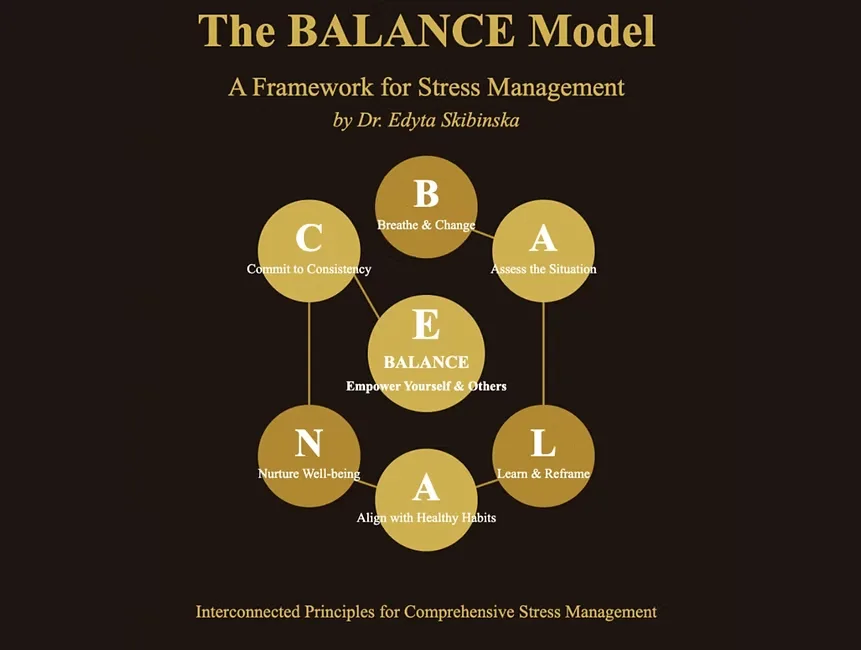
Rather than treating stress as an enemy, I've developed the BALANCE Model—a precision framework that transforms your stress response into a catalyst for growth. Each component leverages specific pathways to build resilience.
THE BALANCE FRAMEWORK: A SYSTEMATIC APPROACH TO STRESS RESILIENCE
B – Breathe & Observe: Using Breathwork for Immediate Stress Relief
Key Technique: 4-7-8 Breathing (4-second inhale, 7-second hold, 8-second exhale) for 2 minutes Why It Works: Activates the vagus nerve, switching your nervous system from stress mode to calm mode Simple Start: Practice when you feel stressed or before important events
A – Assess the Situation: Understanding What You Can & Cannot Control
Key Technique: Two-Column Exercise (write "Things I Can Control" and "Things I Cannot Control")
Why It Works: Helps focus energy where it matters most
Simple Start: Spend 3 minutes each morning identifying what deserves your attention today
L – Learn & Reframe: Transforming Stress into a Source of Growth
Key Technique: Ask yourself: "What can I learn from this challenge?"
Why It Works: Shifts your brain from threat detection to solution-finding
Simple Start: At the end of each day, identify one lesson from a difficult situation
A – Align with Healthy Habits: Building a Lifestyle That Supports Resilience
Key Technique: Protein-first meals and consistent eating patterns
Why It Works: Stabilizes blood sugar and supports stress hormone balance
Simple Start: Begin each meal with protein and try to eat at similar times each day
N – Nurture Emotional Well-Being: Strengthening Inner Balance
Key Technique: 20-minute nature walks
Why It Works: Nature exposure reduces stress hormones and improves mood
Simple Start: Take a short walk outdoors during lunch break or after work
C – Commit to Consistency: Making Stress Management a Habit
Key Technique: Regular sleep schedule (same bedtime and wake time)
Why It Works: Sleep is the foundation of stress resilience
Simple Start: Set a consistent bedtime and create a 15-minute wind-down routine
E – Empower Yourself & Others: Using Your Growth to Inspire Others
Key Technique: Share one stress management tip with a friend or family member
Why It Works: Teaching others reinforces your own practice and creates support
Simple Start: Tell someone about the technique that has helped you most
From Information to Transformation
The BALANCE Framework transforms your relationship with stress through simple, science-backed practices anyone can do. This guide establishes a rhythm of morning breathwork and gratitude to start your day centered, afternoon movement to release physical tension, and evening reflection to process and learn from daily experiences.
This framework doesn't just help you manage stress—it helps you master it, turning potential health threats into opportunities for physiological and psychological growth.
Remember: Small steps consistently taken create meaningful change. Your stress response system can be retrained through these simple daily practices that signal safety to your nervous system.
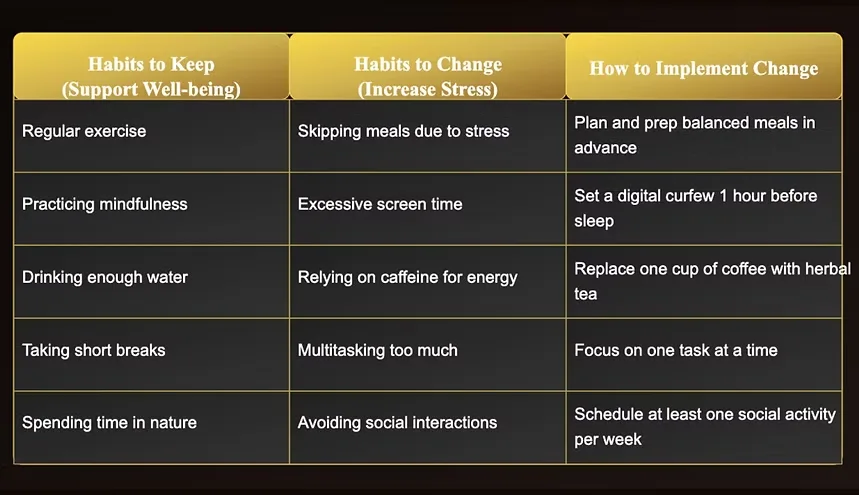
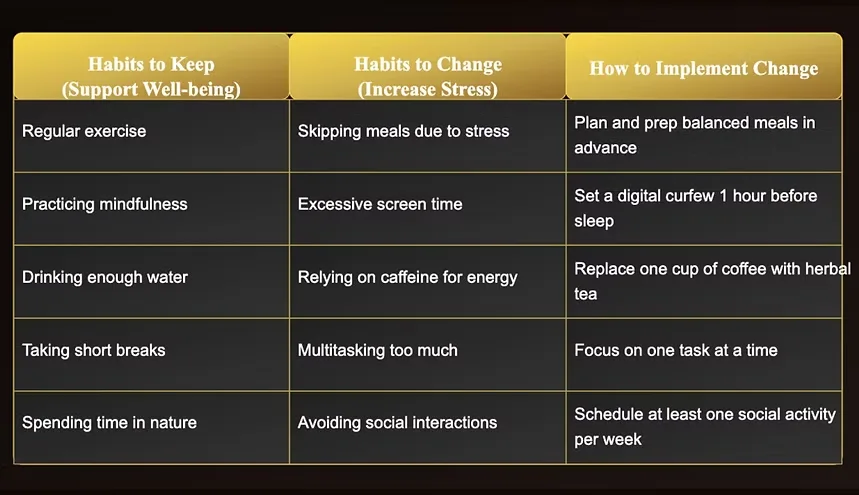
Exercise Worksheet: Identifying and Transforming Habits
To effectively manage stress, we must identify which habits help us and which need to change.
Exercise Worksheet
Identifying and Transforming Habits
Reflection Questions
- What positive habits already help you manage stress effectively?
- What obstacles prevent you from changing negative habits?
- How can you stay consistent in building healthier habits?
By consciously reshaping habits, you create a sustainable stress-management plan that enhances long-term well-being.
Beyond Stress Management to Stress Mastery
Stress isn't something to eliminate—it's a stimulus to harness. The BALANCE Model transforms stress from a health destroyer into a precision tool for growth, performance enhancement, and longevity.
Are you ready to move beyond coping with stress to using it as your competitive advantage?
Dr. Edyta Skibinska is a pioneer in stress resilience and performance optimization. Through her BALANCE Model, she helps high achievers transform their relationship with stress to enhance health, performance, and longevity.
Disclaimer:
Contributor content reflects the personal views and experiences of the author and does not necessarily represent the views of Biohack Yourself Media LLC, Lolli Brands Entertainment LLC, or any of their affiliates. Content is provided for editorial, educational, and entertainment purposes only. It is not medical or dental advice. Always consult qualified professionals before making health decisions. By reading, you agree to hold us harmless for reliance on this material. See full disclaimers at www.biohackyourself.com/termsanddisclaimers