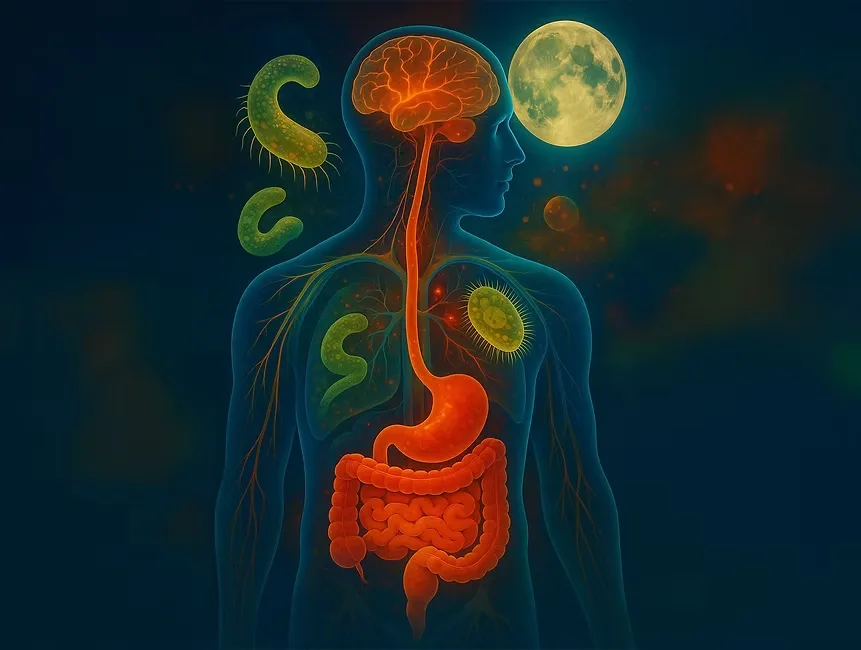
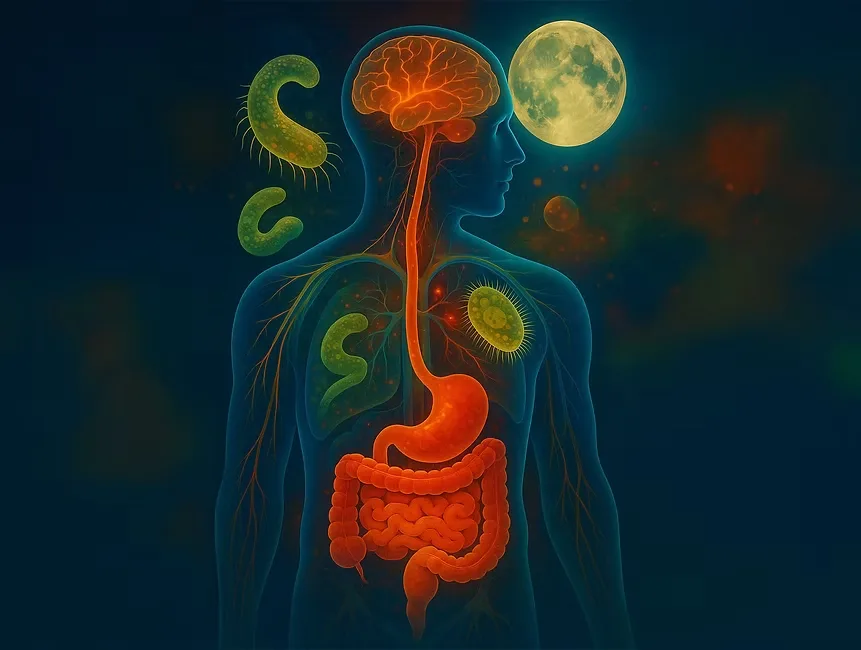
We often think of parasites as simple invaders—unwanted hitchhikers that disrupt digestion or drain energy. But this reductionist view underestimates their evolutionary cunning. In our clinical experience, parasites operate less like primitive organisms and more like ancient viral mimics, deeply entwined with the immune, nervous, and endocrine systems.
They don’t simply inhabit—they manipulate. They cloak themselves in biofilms. They hijack signaling pathways. They resurface not only after international travel or contaminated food, but frequently after viral disruption, such as COVID-19. In fact, what many dismiss as long COVID or hormonal dysregulation may, in part, be the unmasking of latent parasitic activity in a destabilized terrain.
Parasites as Viral Survivors and Ancient Mimics
The idea that parasites are closely related to viruses is not new—it’s increasingly supported by clinical evidence and molecular biology. Both viruses and parasites are intracellular opportunists. They co-evolve with the host, adapt to environmental shifts, and exploit weakened systems.
Studies such as Patterson et al. (2022) have shown that SARS-CoV-2 spike protein fragments can persist in immune cells for months, leading to immune dysregulation, vagus nerve disruption, and impaired gut motility. This post-viral landscape, rich in inflammation and low in regulatory function, is the perfect soil for parasitic emergence. Like viruses, parasites sense vulnerability, and they seize it.
Even more striking, parasites often emerge in cycles aligned with the full moon, when the body’s melatonin drops and serotonin—one of their favored signaling molecules—rises. This cyclical appearance is not folklore; it reflects a biological rhythm rooted in neurochemical tides and mitochondrial signaling. The full moon does not create the parasites—it reveals them
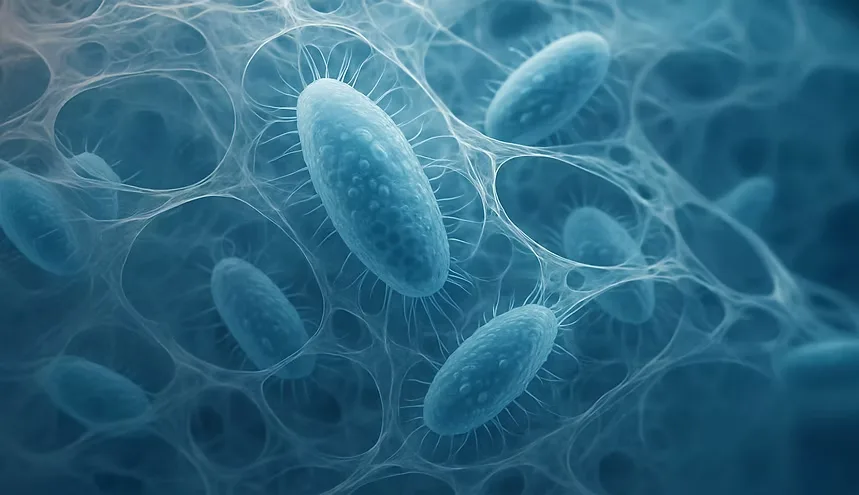
Parasites don’t simply inhabit—they manipulate
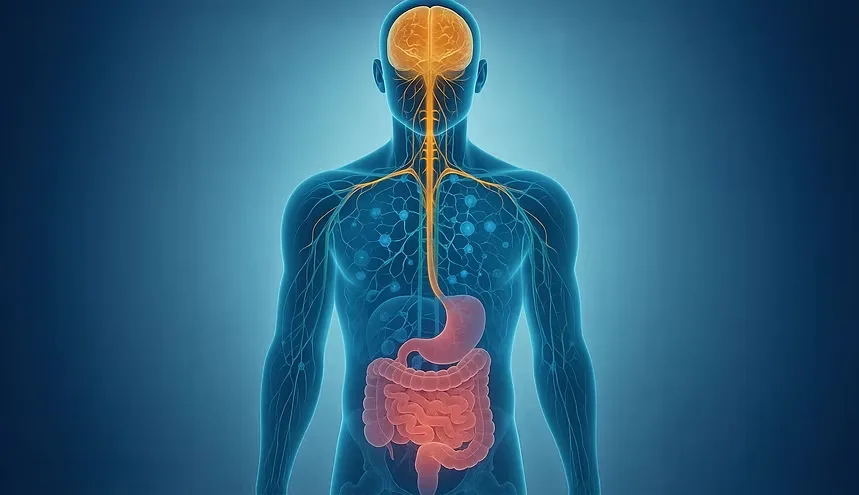
Parasites are deeply entwined with the immune, nervous, and endocrine systems.
The Symptoms You May Be Missing
Parasites rarely act alone. They trigger—or mimic—neurotransmitter imbalances, hormonal shifts, and even autoimmune cascades. Symptoms like anxiety, chronic fatigue, insomnia, eczema, bloating, or brain fog may not stem from lifestyle stress or food alone. They may be messengers of an overburdened terrain, signaling ammonia overload from protein malabsorption, sulfur congestion, or hidden pathogenic load.
Targeted Support That Honors the Terrain
In our approach at The Cochrane Method®, we never begin with eradication. We begin with an assessment. Through applied kinesiology and terrain mapping, we evaluate readiness before deploying a targeted protocol.
- Mastic gum—shown to disrupt microbial biofilms (Paraschos et al., 2007) and soothe the GI lining (Kottakis et al., 2011)—remains a cornerstone of our early-stage interventions.
- Slippery elm, marshmallow root, and binders like charcoal or zeolite provide gentle but effective support for binding and repair.
- Herbs such as wormwood, clove, black walnut, and papaya offer potent broad-spectrum antimicrobial activity, but must be matched to one’s genetic and detox profile. Individuals with MTHFR or CYP polymorphisms, or sulfur sensitivity, may react negatively to agents like grapefruit seed extract or turmeric.
Precision Over Protocols
There is no one-size-fits-all parasite cleanse. That’s why precision matters. In clients with a history of trauma, viral infection, or travel exposure, we often see reactivation. Some parasites even secrete steroid-like compounds that mimic cortisol, dampening the immune response and disrupting the hypothalamic-pituitary-adrenal (HPA) axis (Romano et al., 2015).
We don’t simply aim to “kill bugs.” We work to restore immunologic memory—the body’s innate ability to defend, detoxify, and discern friend from foe.
The Cochrane Method
Restoring immunologic memory—the body’s innate ability to defend and detoxify.
The Takeaway
If you’ve felt “off” since a recent illness… if your digestion, skin, or energy remain disrupted despite dietary perfection… if symptoms cycle around the moon… this may not be psychosomatic. It may be parasitic. But the parasite is not the root cause—it is the reflection of a terrain out of coherence.
At The Cochrane Method®, we help decode these patterns and restore balance—biochemical, emotional, and energetic.
Because true biohacking isn’t about managing symptoms. It’s about restoring coherence—and reclaiming the intelligence of your body’s original blueprint.
Disclaimer:
Contributor content reflects the personal views and experiences of the author and does not necessarily represent the views of Biohack Yourself Media LLC, Lolli Brands Entertainment LLC, or any of their affiliates. Content is provided for editorial, educational, and entertainment purposes only. It is not medical or dental advice. Always consult qualified professionals before making health decisions. By reading, you agree to hold us harmless for reliance on this material. See full disclaimers at www.biohackyourself.com/termsanddisclaimers